FTD stands for first-time deposit: the moment a registered lead funds their trading account for the first time. For brokers, prop firms and crypto exchanges, it's the most important number in the funnel. Everything before it is a cost; everything after it is revenue.
Yet many brokers still judge marketing on cost per lead. That's like judging a restaurant by how many people read the menu.
Why cost per lead misleads you
Picture two campaigns:
| Campaign A | Campaign B | |
|---|---|---|
| Spend | $5,000 | $5,000 |
| Leads | 1,000 | 400 |
| Cost per lead | $5 | $12.50 |
| FTDs | 10 | 24 |
| Cost per FTD | $500 | $208 |
On cost per lead, Campaign A wins. On cost per FTD, Campaign B is more than twice as efficient. Without FTD tracking, you'd scale the wrong campaign.
What full FTD tracking looks like
FTD tracking links four things:
- Source: the campaign, ad, landing page, IB or affiliate that produced the lead.
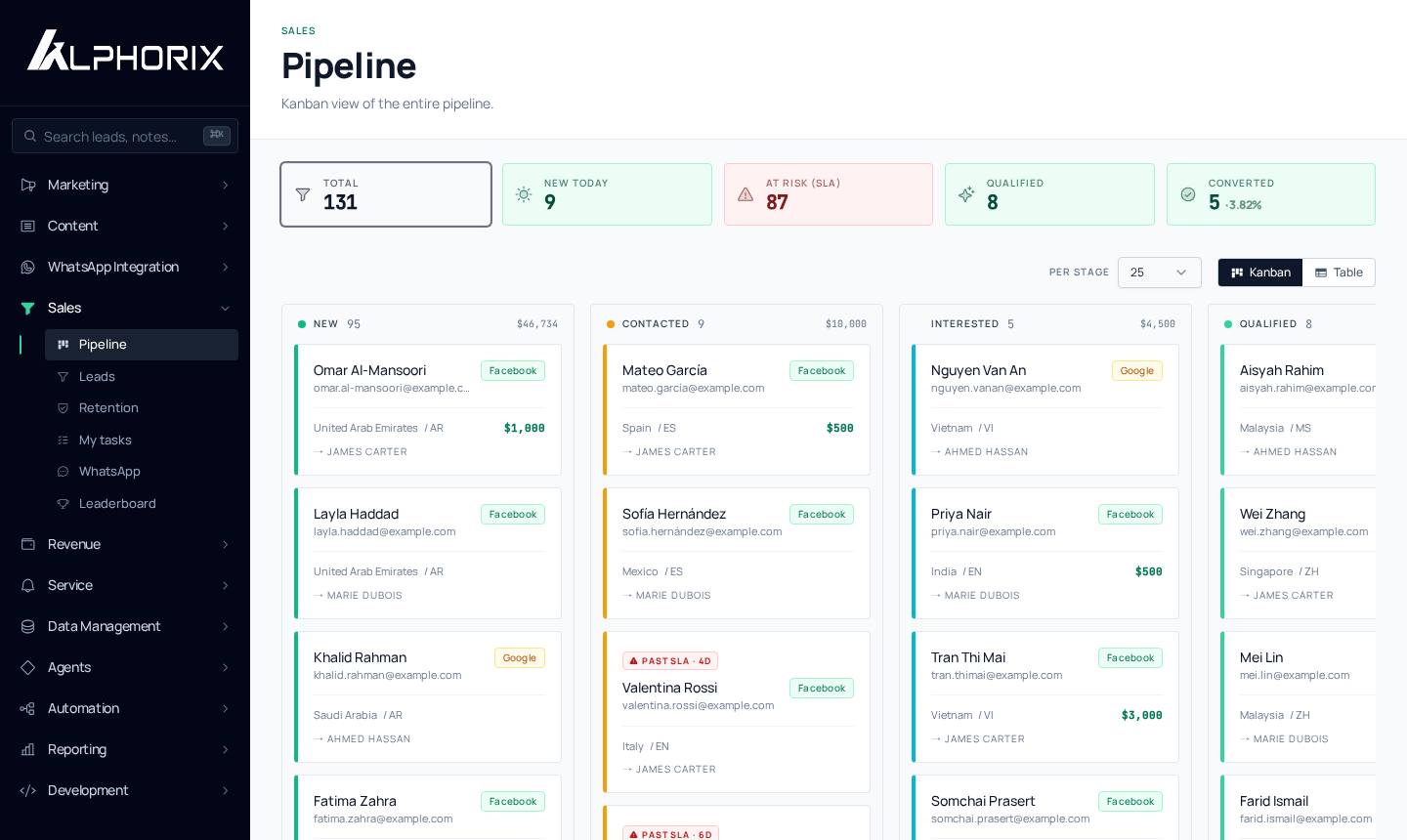
- Lead: the person, their country, language and assigned agent.
- Deposit: the amount and date of the first deposit.
- Feedback: sending that deposit back to the ad platform.
Most brokers have pieces 2 and 3 in different systems: leads in a CRM and deposits in a back-office. FTD tracking joins them.
How to set it up
Step 1: Capture the source on every lead
Use UTM parameters on every link, campaign IDs from Meta Lead Ads, and referral codes for IBs. Store them on the lead at creation and never overwrite them.
Step 2: Record deposits against the lead
Import deposits from your back-office by API, webhook or CSV. Match them to the lead by email, phone or client ID. Mark the first one as the FTD.
Step 3: Report on cost per FTD
Group FTDs by campaign, IB and agent. Divide spend by FTDs. Add average deposit and ROAS (return on ad spend).
Step 4: Send FTDs back to Meta and Google
Send a Purchase (or custom FTD) event server-side through the Meta Conversions API. The ad algorithm then learns what a depositor looks like. See Meta Conversions API for brokers.
FTD metrics to watch weekly
- Lead → FTD conversion rate by source and country
- Time to FTD (days from lead creation to first deposit)
- Cost per FTD by campaign and IB
- Average FTD amount by country and desk
- FTD rate per agent, adjusted for lead quality
Common mistakes
- Overwriting the source when a lead re-registers from another campaign. Keep the first touch and log later ones.
- Counting re-deposits as FTDs. Only the first deposit counts.
- Ignoring time lag. Leads can take 2–4 weeks to deposit, so judge campaigns on cohorts, not on the last 7 days.
- Not deduplicating. The same person registering twice inflates leads and hides your real conversion rate.
How Alphorix tracks FTDs
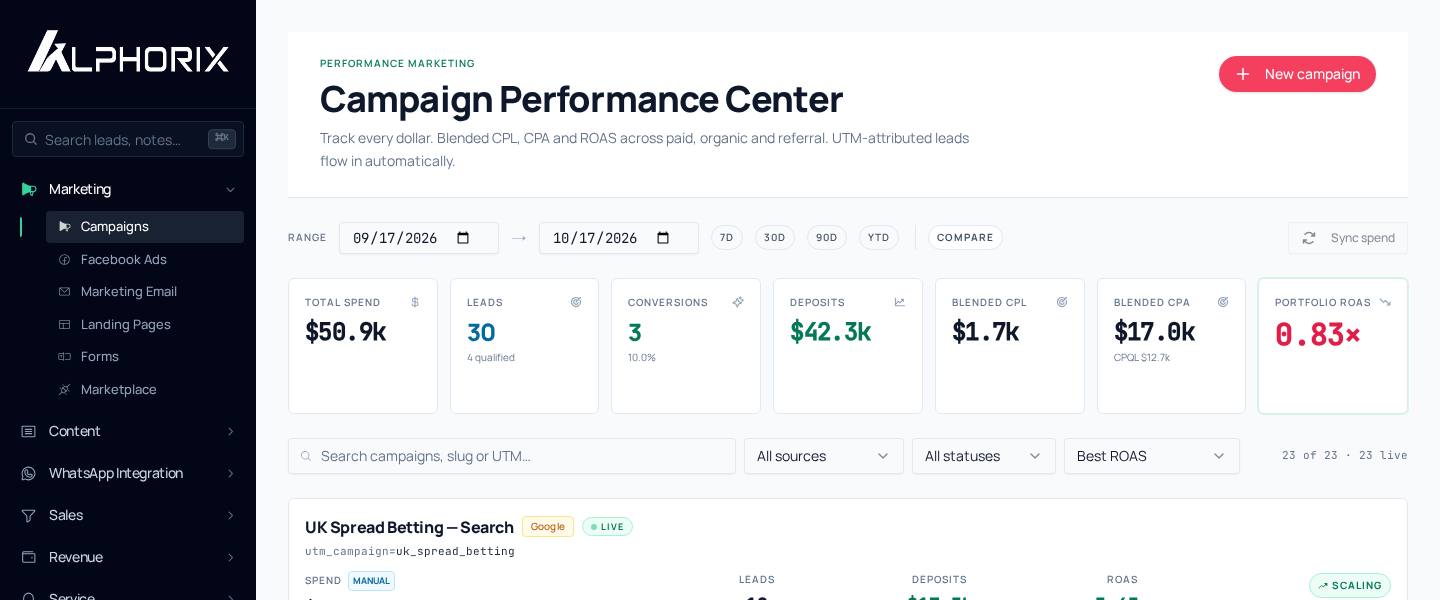
Alphorix keeps the original source on every lead, deduplicates by email and phone, records deposits in a deposit pipeline, and sends FTD events to the Meta Conversions API automatically. Campaign reports show spend, leads, FTDs, cost per FTD and ROAS side by side.
Put this playbook to work in a day.
Routing, WhatsApp, Journeys and FTD attribution in one CRM. 7-day free trial.